stablecoins BIS Says Stablecoins Fail as Money: What Builders Must Build Next The BIS ruled stablecoins fail four key tests for money — comparing them to ETFs, not currency. But for builders, each failure point is a blueprint for what to build next.
defi Aave V4 Targets $4.6T Securities Lending: What Developers Need to Know Aave just made its boldest move yet. The largest DeFi lending protocol is targeting the $4.6 trillion securities lending market with its new V4 hub-and-spoke architecture and the Horizon institutional platform. Here is what the expansion means for developers building in DeFi.
Layer 2 Arbitrum's Enterprise Surge: How Mastercard, LG, and Record RWA Made June 2026 the Biggest Month in L2 History June 2026 was the month Layer 2 stopped being a scaling solution and started being an enterprise platform. Arbitrum landed Mastercard for global stablecoin settlement, LG Electronics for a blockchain ad network pilot, and the #1 ranking in tokenized real-world assets.
Layer 2 ZKsync Goes Enterprise: Why 5 Banks Chose ZK Tech for a $600B Tokenized Deposit Network ZKsync creator Matter Labs laid off staff and fully pivoted to Prividium, a permissioned privacy chain for banks. Six U.S. regional banks with $600B+ in deposits are building the Cari Network tokenized deposit platform on ZK technology. Here's what the pivot means for Ethereum's L2 landscape.
mev How a Counter-MEV Honeypot Drained JaredfromSubway.eth for $7.5 Million Ethereum's most prolific sandwich bot was drained of $7.5M when an attacker deployed 66 fake token contracts that tricked it into granting open spending approvals. The counter-MEV honeypot exposes the hidden danger of unrevoked token approvals and the fatal weakness of automation without verifica
solana Solana Adds a Fourth Validator Client: What Mithril, Alpenglow, and Confidential Transfers Mean for Builders In one week, Solana crossed three infrastructure thresholds: a fourth independent validator client written in Go, a consensus upgrade delivering 100x faster finality, and the return of Confidential Transfers after a thirteen-month remediation. Here's what each milestone means for developers.
Bitcoin Bitcoin Runes Surge to 2-Year High: What Developers Need to Know About Building on Bitcoin's Token Layer Bitcoin just processed over 820,000 daily transactions for the first time in two years, driven by a resurgence of the Runes fungible token standard. Here's what developers need to know about building on Bitcoin's emerging application layer.
tokenization Securitize Is About to Become the First Tokenization Company on the NYSE. Here's Why That Matters. BlackRock-backed tokenization infrastructure provider Securitize is set to raise $400 million and list on the NYSE under ticker SECZ. A $1.25 billion valuation marks a turning point for how Wall Street prices onchain infrastructure.
aave Kraken Eyes 15% Stake in Aave as DeFi's Largest Lender Previews Aavenomics 3.0 Buyback Overhaul Kraken is negotiating a 15% stake in Aave at $385M. Founder Stani Kulechov counters with Aavenomics 3.0 — an automated buyback that directs 100% of protocol revenue to AAVE holders.
ethereum Tether Flips Ethereum: USDT Becomes the Second-Largest Crypto for the First Time in History For the first time in crypto history, Tether's USDT surpassed Ethereum in market cap. ETH crashed to $1,510 while USDT hit $186B — a historic moment for stablecoins.
tokenization Ondo Finance Launches First 24/7 Minting for Tokenized Stocks and ETFs on Ethereum Ondo Finance launched the first 24/7 minting and redemption for tokenized US stocks and ETFs on Ethereum and BNB Chain. Previously limited to 24/5 market hours, users can now mint or redeem tokenized Nvidia, Tesla, Google shares and major ETFs any time.
Uniswap Uniswap v4 and Spark Build a Stablecoin FX Layer: What the $150M Liquidity Migration Means for DeFi Spark deployed $150M into Uniswap v4 pools — but this is bigger than liquidity. It's the first phase of a shared stablecoin FX layer designed for banks, fintechs, and DeFi.
defi Spark and Uniswap Launch $150M Stablecoin FX Layer on Uniswap v4: A New Era for DeFi Infrastructure Spark and Uniswap launched the FX Layer — a $150M stablecoin swap infrastructure on Uniswap v4 letting banks and fintechs plug into shared liquidity. Here's how it works, why v4 hooks make it possible, and what it means for DeFi developers.
ethereum Ethereum Foundation's 40% Budget Cut: What Vitalik's Endowment Model Means for Web3 Developers The Ethereum Foundation is slashing its budget by 40%, laying off roughly 54 employees, and dismantling its standalone PSE unit. Here is what Vitalik Buterin's lean-endowment model means for the future of Ethereum development and why crypto's biggest names are feeling bullish.
ethereum Vitalik Buterin Explains How AI Will Make Smart Contracts Provably Secure Ethereum co-founder Vitalik Buterin has published a detailed vision for how AI-assisted formal verification could make smart contracts provably secure — and several Ethereum projects are already building it. Here's what developers need to know.
MiCA Binance Withdraws Greek MiCA Bid With 5 Days to Deadline: What It Means for Crypto in Europe Binance withdrew its MiCA license application in Greece on June 24, just five days before the EU's June 30 deadline. With millions of European users and no replacement license in sight, the world's largest crypto exchange faces its biggest regulatory test yet. Here's what it means for Web3.
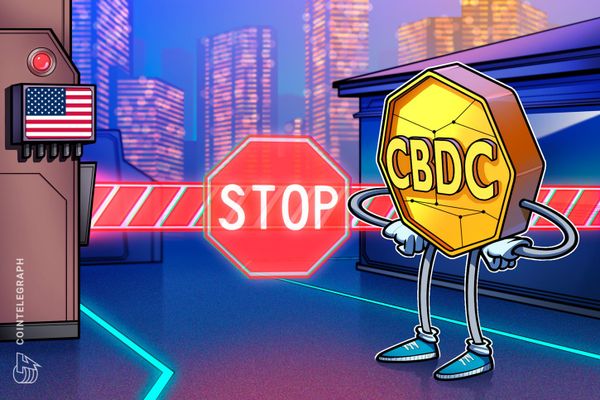
crypto-regulation US Crypto Regulation Reaches a Defining Moment: CBDC Ban Becomes Law, CLARITY Act Heads to Senate Vote Congress just banned a Federal Reserve CBDC through 2030, and the CLARITY Act is heading to a Senate floor vote in July. Here is what both milestones mean for web3 developers, stablecoins, and the future of crypto regulation in the United States.
defi The KelpDAO $292M Exploit and the $10B DeFi Bank Run: What Every Web3 Developer Needs to Know The KelpDAO exploit drained 116,500 rsETH ($292M) through compromised off-chain infrastructure — not a smart contract bug. It triggered a $10B DeFi bank run, froze lending markets across eight protocols, and exposed how cross-chain bridges can fail. Here's what every Web3 developer needs to learn.
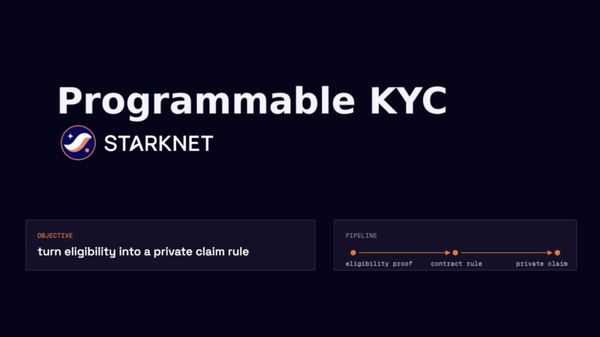
Starknet StarkWare Unveils Private KYC on Starknet: Zero-Knowledge Identity Verification Without Exposing Personal Data StarkWare's Private KYC demo uses zero-knowledge STARK proofs and STRK20 privacy features to let users prove specific identity attributes on Starknet without revealing their passport, name, or address. Here's how the system works and what it means for compliant Web3 development.
ethereum Ethereum Foundation Restructuring: 40% Budget Cut, 20% Staff Reduction, and the $11B Research Lab Built by EF Alumni On June 23, 2026, the Ethereum Foundation cut 54 jobs, announced a 40% budget reduction, and restructured into five domain clusters while five departing researchers launched Ethlabs, an $11 billion-backed independent research lab.
ethereum UBS Tests Ethereum for Regulated Banking: What the Nethermind Compliance PoC Means for Web3 Developers UBS, the Swiss banking giant managing $6.9 trillion in assets, just proved that public Ethereum can meet the compliance demands of regulated financial institutions.
Synthetix Synthetix Votes to Retire sUSD: What the DeFi Stablecoin Wind-Down Means for Developers Synthetix governance votes to retire its depegged sUSD stablecoin, compensating holders with vested SNX tokens. Here's what the wind-down means for DeFi protocol design and the future of decentralized stablecoins.
ethlabs Ethlabs Explained: Five Former Ethereum Foundation Researchers Just Launched a New R&D Lab Backed by Joe Lubin Five former Ethereum Foundation researchers launched Ethlabs, an independent nonprofit R&D lab backed by Joe Lubin, Bitmine, SharpLink, and Anchorage Digital. The launch signals a structural shift in how Ethereum protocol research gets funded and governed.
real-world-assets Tokenized Real World Assets: How Baillie Gifford, Anchorage, and DeFi Are Bringing Trillions On-Chain in One Day Baillie Gifford launched a UK-regulated tokenized bond fund on Ethereum and Solana, Anchorage Digital opened tokenized deposit infrastructure for banks, and Venus Protocol added tokenized stocks as DeFi collateral. Three announcements, one signal: institutional tokenization is here.
ethereum Taiko Bridge Exploit Explained: How a Leaked Key Led to $1.7M in Forged Withdrawals Taiko halted block production after an attacker exploited its bridge for $1.7M using forged withdrawal proofs. The root cause: an SGX signing key left exposed on GitHub.